Three million sounds like a big number, and it seems even larger when you realize that’s how many times Wisconsin first responders are paged out each year.
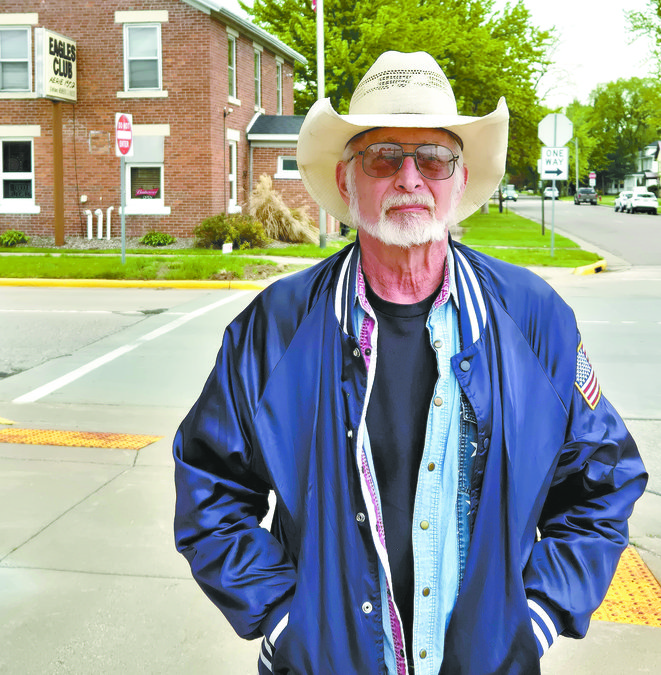
Rich Bannen has been on hundreds of those calls as a first responder and provided life-saving care for people in the most unthinkable moments — car accidents, heart attacks and fires, just to name a few — across the state.
Now, after more than half of a century, he said it’s time to step down, mostly for health reasons. “I feel it’s time to hang up the towel and let someone else carry the banner. This was basically my time to not renew my certificates, which is basically my retirement.”
Even though Bannen’s stepping away from his positions, he is still prepared to help someone in need. “There’s a fanny pack in the back seat of my truck and in my jeep with emergency kits in both of them.”
Bannen started working in emergency services in the early 70s; however, he had plenty of applicable experience growing up on his family farm. His father was a doctor, and it was Rich’s job to take care of their animals.
“I was only 15 or 16 years old at the time, and I was giving all of the shots,” he said.
After his father passed away in 1971, he moved to Missoula, Mont., where he became friends with members of a local ski patrol. He joined their team, which required him to get his advanced first aid certification on Feb. 6, 1973. “That was my first training in first aid, and that was before I even knew what EMTs were.”
The training wasn’t a cakewalk: Bannen had to spend weeks working out of an emergency room and doing ride-alongs with law enforcement. And once he obtained his certification, the frantic work kept him on his toes.
“Back then in Montana, we didn’t even have ambulances. There were squad cars — station wagons — that the county drove... the sheriff’s department were our ambulances. They had a gurney in there, and we would put a patient in,” he said. “If we had a multiple-car accident or many injuries, we had to do the best we could.”
In 1975, Bannen enlisted in the U.S. Navy, serving as a heavy equipment operator until 1981. He was in a group called the “Seabees,” which is the construction battalion (CB) of the U.S. Navy. They serve as builders for infrastructure, such as runways and bridges in hostile zones. They are also trained combat defenders.
During his time in the military, Bannen was assigned to exotic places, like Guam and Rota, Spain, as well as on domestic soil. While stationed in California, his background in medical aid training gave him an opportunity to receive military medical training.
“My battalion found out I had first aid training, so they stuck me with their corpsmen all throughout my time in the service,” he said.
At the tail end of his time in the military, Bannen moved to Dane, Wisc., to run a welding business.
“The first responder stuff was secondary to driving trucks, backhoes, excavators, and all that,” he said. “When I ran heavy equipment, one of my jobs was fixing it, so I learned how to weld. I opened a shop up in 1979 when I was still in the reserves in Madison.”
In 1982, the village asked him to join their volunteer fire department, which was struggling to maintain a sufficient roster for their area. Bannen said the village had a population around 400 at the time.
“I was on the fire department there until 1998,” said Bannen. “Our training there was as firemen, but as you were there longer, you got training in first aid.”
There wasn’t an ambulance service in Dane at the time (the nearest ones were in Waunakee, Lodi and DeForest), so Bannen became a first responder.
Bannen’s welding business closed in 2001, so he had to find another line of work. He decided to settle in Southwest Wisconsin to be close to his family. “I actually had a job lined up in Montana running an excavator. My goal was to move out there, but then I found out I had a grandbaby coming.”
Bannen eventually found work as a ranch manager for the Children’s Ranch in Prairie du Chien. In 2003, Bannen performed first aid for a man who fell off a horse and incurred a serious injury. His boss at the time suggested he become recertified in first aid. Shortly thereafter, he became part of the Bridgeport and Prairie du Chien First Responders.
Over the next several years, he also joined the First Responders in Eastman, Seneca and Steuben, serving on all four simultaneously. He worked with emergency services in Southwest Wisconsin for 23 years.
First responders are typically either Emergency Medical Responders (EMRs) or Emergency Medical Technicians (EMTs). When there’s a traumatic event, there are dozens of people that respond, from police to the fire department to the ambulance service. But, often, it’s the first responders that arrive at the scene before anyone else (hence the title), and their goal is to keep people alive by implementing immediate care, including CPR, rescue breathing and bleeding control.
“Our medical calls that we go on can be really traumatic for the first responders. There can be some really tough situations... You’ve got backboards, splints for broken arms and legs, and bandages for open wounds. You’ve got to know how to do all of that,” said Bannen.
He gave credit to all of the emergency responders he’s worked with over the years, saying the crews are “wonderful people.”
“I can’t say enough for my fellow first responders, and that includes police, sheriff’s department, fire department, and ambulance services. I can’t say enough about all of the people we have in the services... We need more,” he said.
Wisconsin’s medical and public safety services, including first responders, have struggled to recruit and maintain members. Bannen encouraged anyone interested in being an EMR to do their research and reach out. “The main thing you need to do is contact your local group and tell them you’re interested. Many groups will help pay for training or reimburse you.”
Bannen also praised the communities he’d worked with over the past two decades, saying Eastman, Bridgeport, Seneca and Steuben have helped financially support their first responder units throughout the years.